
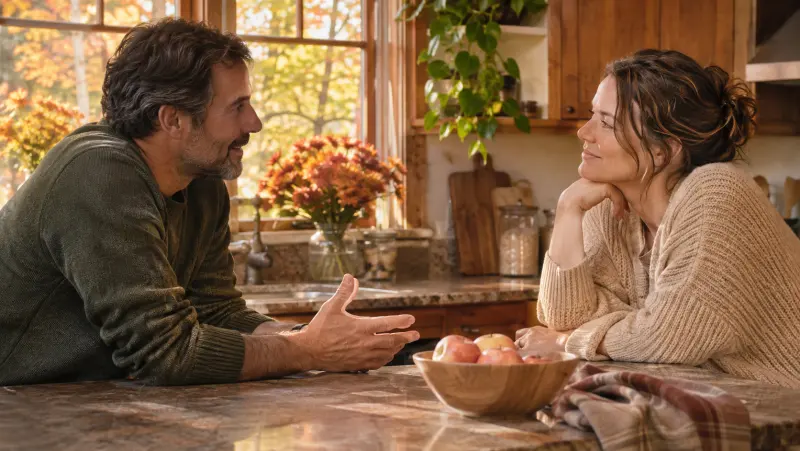
More time together can feel unfamiliar.
Retirement can change routines, roles, and expectations about how you share a life.
Reach out
A Change You May Have Looked Forward To
Retirement can be welcome and still bring unexpected strain. A schedule that once organized your days may disappear. You may spend more time together while discovering that you imagined this period differently. One person may want shared plans; the other may want space to explore independently.
Neither response tells the whole story about the relationship. The transition can make previously workable differences more visible because the structure around them has changed.

Roles That No Longer Fit Quite the Same Way
Work may have shaped who handled errands, household decisions, or social arrangements. When one partner retires before the other, the balance can change unevenly. Expectations may shift before either person has put them into words.
It can help to describe the actual daily arrangement rather than rely on what seems obvious. What has each person taken on? What feels voluntary, assumed, or overlooked? These questions can reveal concerns beneath a disagreement about one task.

Togetherness and Independence
Wanting time apart does not automatically mean rejecting the relationship. Wanting more shared time does not automatically mean asking too much. The meaning of those wishes may depend on the history between you and what this stage represents to each person.
A conversation might include what you hope to share, what you want to preserve for yourself, and what you fear losing. Those hopes can be easier to discuss before they turn into opposing positions.
The Parts That Are Hard to Admit
You may miss the recognition, routine, or sense of purpose that came with work. You may also feel relieved to leave it behind. If your partner experiences retirement differently, you might hesitate to say that your own adjustment is more complicated.
There is room for more than one emotional response. You do not have to describe this stage as either a reward or a disappointment. Specific experiences often say more than a broad judgment about how retirement is supposed to feel.

A Relationship Conversation in a New Stage
Dr. Boyes provides couples counseling at Mindful Results. You can discuss the changing relationship alongside the practical adjustments of this period. Individual therapy can also offer space for questions about identity and meaning that you want to explore personally.
A consultation is a place to ask about fit. It is not a commitment to a particular course of care or a promise that you will reach the same vision of retirement.
Questions You May Have
Is this only for couples who are both retired?
No. A change affecting one partner can affect the routines and expectations of both.
Can we talk about different plans for the future?
Yes. Understanding what those plans mean to each person can be part of the conversation.
Is this financial retirement planning?
No. The focus is emotional and relational experience, not investment, legal, or financial advice.
Continue Reading
Couples Counseling
Explore this part of the work and the questions you can bring to a first conversation.
Read more
Therapy in Midlife
Explore this part of the work and the questions you can bring to a first conversation.
Read more
When a Life Change Brings Mixed Feelings
A move, new role, or family transition can bring relief and loss into the same experience.
Read moreA conversation can be a beginning
Contact Mindful Results to ask about fit and a first consultation.
Request a free 15-minute consult